Proyecto Harmonia SYM

Logo gruposym

Holography. A way to tackle new challenges in biosensing.

HARMONIA project

Funded by Consellería de Innovación, Universidades, Ciencia y
Sociedad Digital de la Generalitat Valenciana (Ref. PROMETEU/2020/094).

Who we are?

The HARMONIA project pioneers the development of next-generation hydrogel-based wearable optical biosensors designed for continuous, non-invasive health monitoring. Leveraging advanced materials science, biofunctionalization, and optical biosensing technologies, HARMONIA aims to revolutionize personalized healthcare by transitioning from traditional, centralized diagnostics to home-based, real-time health monitoring solutions.

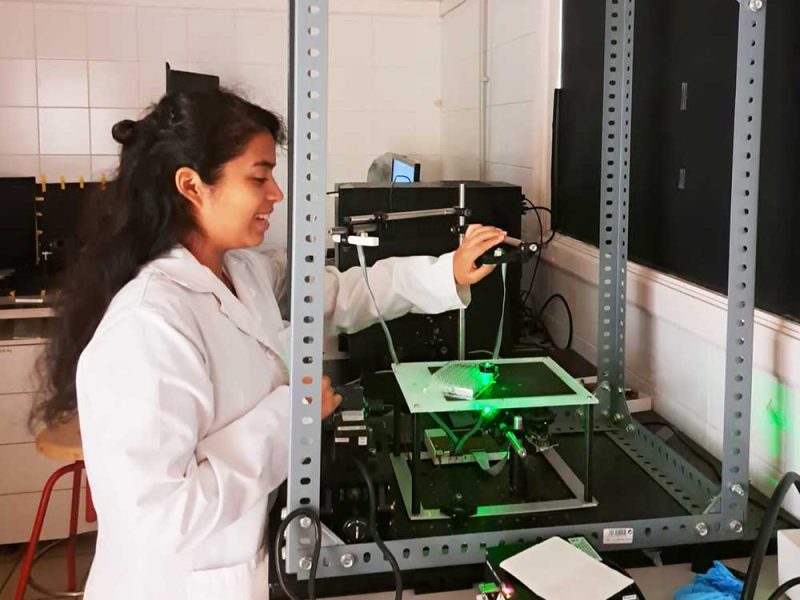
At the core of this innovation are hydrogel-based wearable optical biosensors (HWOB) that utilize slide-ring hydrogels combined with specific bio-recognition probes. These sensors detect biomarkers in sweat and interstitial fluid (ISF) by responding to recognition events with measurable changes in volume and diffractive properties. Integrated with microneedles and holographic detection techniques, these skin patch biosensors offer precise, automated analysis.

Proyecto de investigación Prometeo

HARMONIA focuses on three critical healthcare applications:

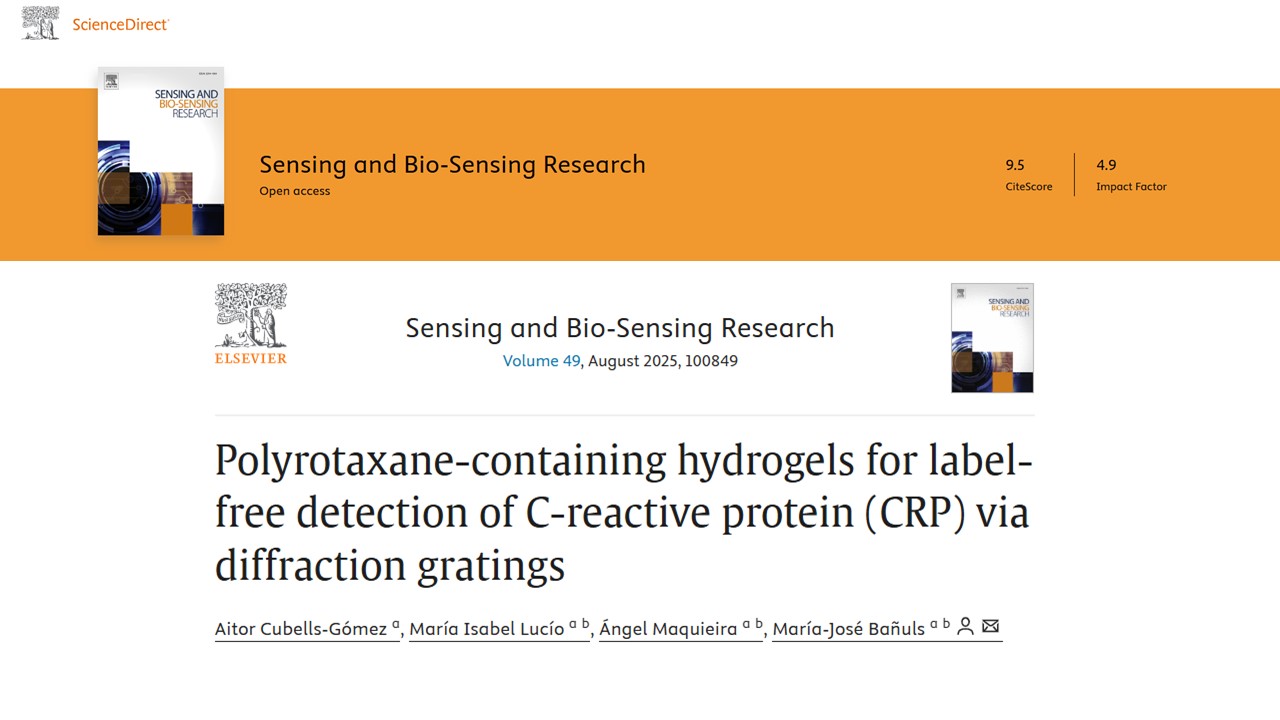
  • Inflammatory Bowel Disease (IBD) Monitoring: Continuous detection of biomarkers like C-reactive protein (CRP), Calprotectin (CP), and Interleukin-1β (IL-1β) for early identification of disease flare-ups.
  • Drug Allergy Testing: Innovative detection of allergen-specific immunoglobulin E (IgE) for safer, faster drug allergy diagnostics.
  • Detection of Circulating Biomarkers: Unobtrusive tracking of health indicators such as microRNA, alpha-fetoprotein, and histamine linked to chronic and acute diseases.

This groundbreaking research aims to enhance diagnostic precision, support proactive healthcare strategies, and contribute to achieve the United Nations Sustainable Development Goal 3 (Good Health and Well-being). HARMONIA promises transformative impacts in healthcare by enabling continuous, personalized monitoring that empowers clinicians and patients alike.

Members

Main Researchers

Ángel Maquieira Catalá

Emeritus Full Professor

Prometeo working group

María Isabel Lucío Benito

Assistant Professor

Aitor Cubells Gómez

Predoctoral Researcher
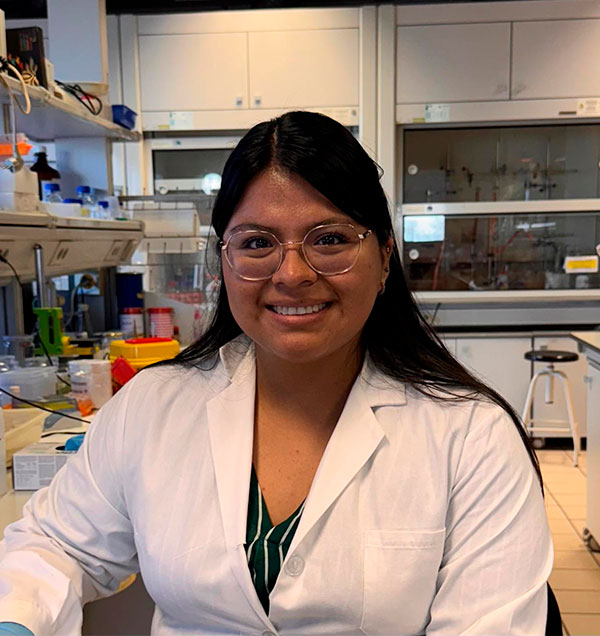
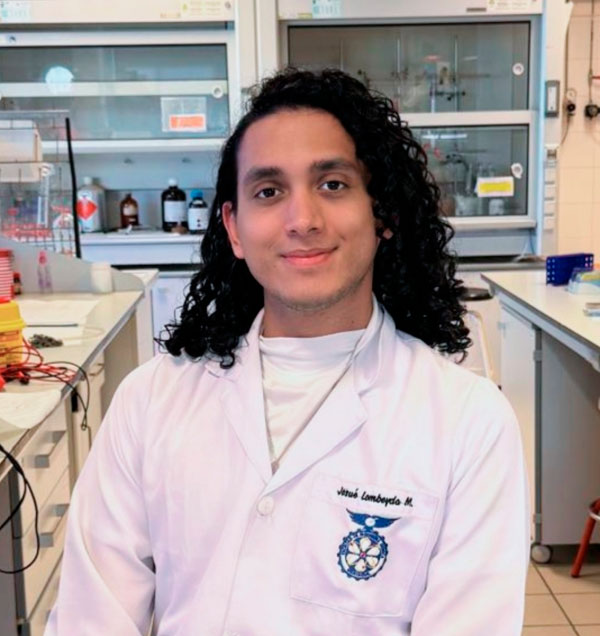
Josué Lombeyda Manzo

Predoctoral Researcher

Project

Harmonia Project

The project is structured into five Milestones, comprising nine Research Lines:

MILESTONE 1

Study and testing of systems for biosensing based on holographic phenomena.

This milestone is devoted to the development of basic analyte receptors employed in the biosensor systems, and is composed by two research lines:

  • Research line 1: Hydrogel materialsResearch about development of new hydrogel materials, based on slide-rings, and their functionalization with nucleic acids and proteins is now in progress.
  • Research line 2: Bioreagents and materials preparation by recombinant techniques.We aim the recombinant production of both specific IgE and peptides that mimic the major determinants of amoxicillin, as the main β-lactam antibiotics implicated in drug allergy. Also, development of bioactive M13 hydrogels tailored to interact with the target analyte, by expressing particular peptides on the surface of the phage M13, is under study.

MILESTONE 2

Transducers

Gratings ol materials optimized in Milestone 1 will be fabricated through different approaches: creating biogratingsn the hydroge of photoactivatable hydrogels, recording gratings by holography in transmission and reflection modes with self-polymerizable monomers, as well as water-stabilized perovskites. All the transducers are to be evaluated in their sensing capacity. Three research lines are to be explored.

  • Research line 3. Biogratings.Photoactivatable hydrogel biogratings are being designed and further evaluated.
  • Research line 4. Volume hologram gratings (VHG). To be fabricated on slide-ring hydrogels and using water-stable perovskites as recording material.
  • Research line 5. Transducers made of M13 hydrogels. Whose design, optimization and performance analysis comprises the following activities: concentration-mediated self-organization and gelation; characterization of M13 hydrogels; effect of cross-linkers; and study of emission change upon target exposure.

MILESTONE 3

Synthesis, characterization and functionalization of perovskite nanocrystals for biosensing applications

Different approaches will be assessed and designed for fabricating wearable systems to collect and analyze sweat or ISF.

  • Research line 6. Skin-patches for sweat collection. They will be designed and fabricated with a connected sampling and sensing cell. The performance and features of the final hydrogel-based optical transducer (VHG/ biogratings) will be taken into consideration when comparing and choosing various designs.
  • Research line 7.Microneedles for interstitial fluid collection. Microneedles will be moulded with hydrogels. Either, commercial hollow microneedles can be used.

MILESTONE 4

Integration

This milestone tackles to integrate the developments done in microneedles and in the transducers, to have a whole system, including, in the case of need, the reader system

  • Research line 8. Sampling + Biosensing integration. Volume holographic gratings will be incorporated on hydrogel microneedles for ISF sampling and analysis. Hollow microneedles will be filled with developed M13 and DNA hydrogels for drug allergy testing and biomarkers detection, respectively.

MILESTONE 5

Demonstrators

The objective of this milestone is to demonstrate the functionality, safety, and analytical performances of the integrated biosensor developed. It aims to analyze the different solutions found to determine the one/s with the highest potential and then integrating the developments done in microneedles and in the transducers, to have a whole system, including, in the case of need, the reader system. In an initial step, the prototype will be tested with artificial sweat, ISF and pork skin under laboratory conditions as a preliminary stage before the test in human skins.

  • Research line 9. Proofs of concept. The following systems, coming from the integration of all developed technologies, will be set up and tested.
    • Skin-patch with VHG/biogratings for IBD biomarkers detection in sweat.
    • Label-free hydrogel-based microneedle patch and VHG for IBD biomarkers in ISF.
    • M13-based microneedle patch for allergy detection in ISF.
    • Nucleic acid-hydrogel-based patch for detecting circulating biomarkers in ISF.
    • Label-free hydrogel-based Microneedle patch and VHG for other biomarkers in ISF.

Scientific production

Publications

  • All
  • Publications

News

  • All
  • News

Join us

Employment opportunities

Send us your CV

Contact us